Common Winter Road Hazards in Northern Ontario (and How to Handle Them)
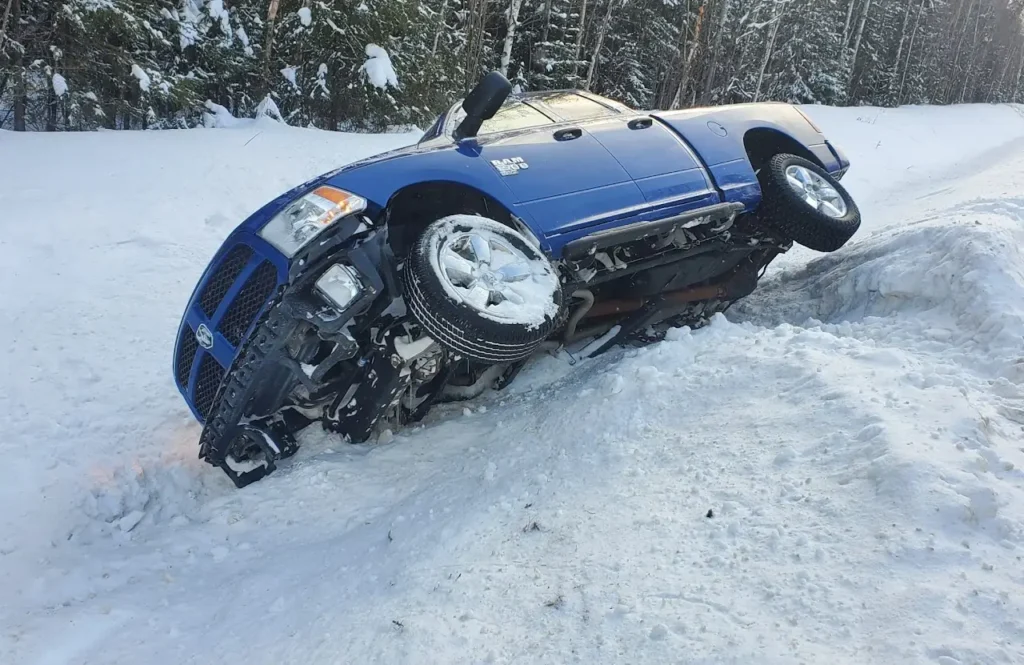
Most of our calls in Thunder Bay come between November and April. After years of pulling cars out of ditches and boosting batteries at -35, these are the winter hazards we see most often, and what actually helps.
Black ice
Black ice is the hazard drivers underestimate most. It forms on bridges, overpasses, shaded curves and open stretches where the wind strips the snow away, and it is close to invisible. If the road looks wet when it is below freezing, assume it is ice.
What helps: slow down before bridges and curves, keep a long following distance, and avoid sudden braking or steering. If you start to slide, look and steer where you want to go.
Packed snow and slush
Snow and slush reduce traction and stretch stopping distances well beyond what most drivers expect. Plow ridges and ruts can grab a tire and pull the vehicle toward the shoulder.
What helps: winter tires, lower speeds, and roughly double your normal following distance.
Blowing snow and whiteouts
Wind off Lake Superior and across open fields can drop visibility to almost nothing in seconds, especially on Highway 11/17 east toward Shuniah and Nipigon.
What helps: slow down gradually, turn your full lights on, and if you cannot see, pull well off the road at a safe spot and wait it out. Check Ontario 511 before you leave and avoid travel during severe weather warnings.
Cold-weather breakdowns
Extreme cold kills weak batteries, thickens fluids and drops tire pressure. A dead battery is the single most common call we get on cold mornings.
What helps: have your battery tested before winter, plug in your block heater, keep tire pressure topped up, and keep the fuel tank at least half full. If you do get stuck, a battery boost or replacement is usually quick.
Long distances between towns
Outside the city, help can be a long way off, and cell coverage is not guaranteed. A breakdown without supplies can become dangerous quickly.
What helps: tell someone your route and arrival time, carry a winter kit (blankets, flashlight, booster cables, shovel, food and water, phone power bank), and save a 24/7 tow number before you leave.
Plows, collisions and delays
Snowplows, sanders and collisions slow everything down. Passing plows is one of the more common ways winter crashes happen.
What helps: give plows room, be patient, and build extra time into every winter trip.
Wildlife
Moose and deer cross Northern Ontario highways year round, and they are harder to spot on dark winter evenings.
What helps: scan the shoulders, use high beams when there is no oncoming traffic, and slow down in posted wildlife areas.
If you end up in the ditch
Stay in the vehicle with your hazards on, stop spinning the tires, and call for help with your nearest cross street or highway kilometre marker. Read about our winch-outs and ditch recovery, or see our longer guide to winter highway driving and long-distance towing.
Total Towing is available 24/7 for towing in Thunder Bay and across Northwestern Ontario. Call (807) 374-1122.